
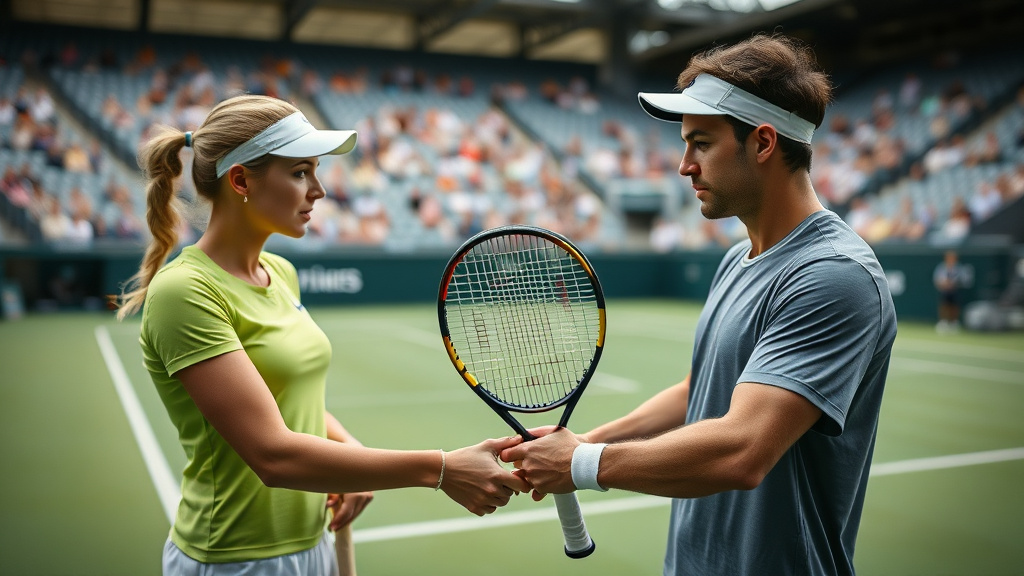
Grand Slam tournaments constitute the apex of professional tennis, where victors emerge and legacies are forged. Yet below the polished exterior lies an intense psychological battlefield. Elite players encounter immense pressure, doubt in themselves, and fear of failure that can sabotage even the most proficient athletes. This article investigates how mental toughness training—encompassing visualization techniques, present-moment awareness, and reframing strategies—enables tennis professionals to control their feelings, maintain focus under extreme conditions, and ultimately achieve peak performance when it matters most.
Grasping Mental Toughness in Professional Tennis
Establishing Psychological Strength in Tennis
Mental resilience in professional tennis means an athlete’s capacity to maintain focus, composure, and confidence when dealing with adversity during intense tournaments. It includes the emotional resilience to bounce back from setbacks, such as losing a crucial set or encountering a tough adversary. For tennis professionals, resilience is not merely about physical endurance but about building an steadfast psychological strength that permits players to navigate the emotional rollercoaster characteristic of professional sports. This emotional characteristic distinguishes champions from contenders.
The pressures of significant tournaments intensify the necessity for psychological strength markedly. Players compete across numerous contests lasting several weeks, each demanding peak physical and psychological performance. The cumulative stress of constant travel, public attention, and expectations from sponsors and fans generates a pressure cooker environment. Mental resilience enables professionals to separate themselves from distractions, maintain perspective during periods of losses, and preserve drive through demanding competitions. Without this psychological foundation, even technically superior players may collapse when pressured.
Research in sports psychology has consistently demonstrated that mental resilience is a developable competency rather than an innate trait. Athletes can develop and strengthen their resilience through deliberate practice and focused strategies. Mental training programs have evolved into essential elements of professional tennis development, alongside physical conditioning and technical coaching. By understanding resilience as a learnable capacity, players gain agency over their psychological performance and can deliberately improve their performance edge.
The Emotional Pressures of High-Level Championships
Premier tournaments introduce distinct mental pressures that set them apart from regular tour events. The heightened public attention, legacy weight, and career-altering stakes create unprecedented pressure. Players must navigate elevated nervousness, pursuit of flawlessness, and concern about letting down themselves and their coaching staff. Additionally, the lengthy event schedule demands sustained mental energy and psychological control across several rounds, heightening cognitive drain and risk of performance deterioration.
The pressures present in Grand Slam tournaments intensify self-doubt and worst-case scenario thinking. Competitors may become preoccupied with potential failure outcomes rather than concentrating on present-moment performance. This mental fragmentation can result in loss of concentration, impulsive decision-making, and affective instability during critical points. Grasping these mental patterns is essential for building strong mental resilience strategies that confront the unique demands inherent to the sport’s highest-level events.
Core Strategies for Developing Psychological Resilience
Mental resilience training encompasses a mix of scientifically-backed techniques intended to build emotional strength in intense competitive settings. These approaches help tennis professionals improve emotional control, keep their attention during key situations, and convert nervousness into competitive advantage. By consistently working on these techniques during training and competition, athletes create neural pathways that support peak performance when confronting Grand Slam pressures and title-deciding situations.
Visualization and Mental Imagery
Mental imagery includes mentally practicing successful competition scenarios ahead of time on court. Elite tennis players utilize detailed imagery to replicate competitive pressure, opponent strategies, and victory scenarios. This approach engages the same neural pathways as actual training, enhancing confidence and performance decisions. By consistently practicing winning serves, critical break moments, and tournament victories, professionals develop mental blueprints that guide their execution during actual championship matches.
Advanced visual preparation surpasses simple success imagery to include adversity scenarios. Players visualize recovering from challenges, managing frustration, and executing strategies when trailing in sets. This preparation builds psychological resilience by familiarizing the mind with challenges before they occur. When players face actual high-pressure moments during major championships, their brains recognize familiar patterns, reducing anxiety and enabling composed, strategic responses.
Stress Management and Breathing Exercises
Structured breathing practices deliver instant physical balance in high-pressure situations. Box breathing—breathing in for four counts, pausing for four counts, breathing out for four counts—stimulates the parasympathetic nervous system, reducing the fight-or-flight response caused by competitive tension. Tennis professionals use these methods in the intervals between points, when changing ends, and ahead of critical serves, developing a portable stress management tool that preserves peak mental states throughout matches.
Progressive muscle relaxation and mindfulness meditation for stress support breathing work by methodically reducing physical tension and mental clutter. Players learn to pinpoint stress manifestations—tight shoulders, shallow breathing, racing thoughts—and apply targeted interventions. Regular practice of these techniques during training develops automatic responses, enabling athletes to utilize relaxation responses instinctively when facing major tournament stress, maintaining the cognitive sharpness essential for competitive success.
Establishing Resilience Building Initiatives
Tennis organizations and coaching teams internationally are increasingly recognizing the vital significance of embedding mental resilience training into their skill-building curricula. These detailed frameworks merge research-backed mental strategies with tennis-centered contexts, ensuring players develop practical coping mechanisms tailored to championship environments. Leading tennis academies now allocate significant funding to mental conditioning, acknowledging that psychological strength directly correlates with competitive success and enduring career viability.
The rollout procedure starts with individual assessments identifying each player’s distinct psychological vulnerabilities and strengths. Specialized sports psychologists partner with coaching personnel to develop tailored training frameworks targeting particular performance issues. These interventions generally extend over multiple months, including consistent meetings that steadily build in difficulty and sophistication. Players develop the ability to identify stressful situations, develop adaptive responses, and strengthen self-assurance through regular engagement with high-pressure simulations during practice sessions.
- Create initial mental health evaluations for all athletes
- Implement weekly mindfulness and meditation practice sessions
- Recreate competitive pressure situations during practice settings
- Assess advancement through performance metrics and player feedback
- Deliver regular support from certified sports psychologists
Effective execution demands commitment from the complete organizational framework, encompassing players, coaches, support staff, and administrators. Ongoing assessment and adjustment of coaching initiatives ensure they stay aligned with evolving needs to changing competitive requirements. Organizations implementing comprehensive mental resilience frameworks consistently produce athletes who thrive when stakes are highest, demonstrating documented progress in title performance and extended athletic careers.
